Home › Hurricane Prep
How this site makes money: we connect homeowners with independent licensed roofers, and a few product links may pay us a commission. Safety facts below come from the National Hurricane Center, FEMA and the Florida Division of Emergency Management.
Florida hurricane prep guide for your house
By the Roofing of Miami team · Updated October 2026
Florida hurricane season runs June 1 to November 30, and it peaks around September 10, per the National Hurricane Center. Get the house ready before June: check the roof, sort out window protection, plan a safe generator setup, and know your insurance deadlines. This guide covers each step, with the official source under every fact.
Get your roof checked before the next storm
Free inspection request, no obligation. A licensed local roofer calls you back.
Before you sign, make any roofer show you:
- A Florida state license. Check it yourself at the DBPR license search (myfloridalicense.com).
- A certificate of insurance (general liability), sent straight from their insurer.
- A workers comp certificate, or a valid exemption.
- A written warranty, with its length and what it covers.
More warning signs in our contractor scams guide.
Live: National Hurricane Center 7-day outlook
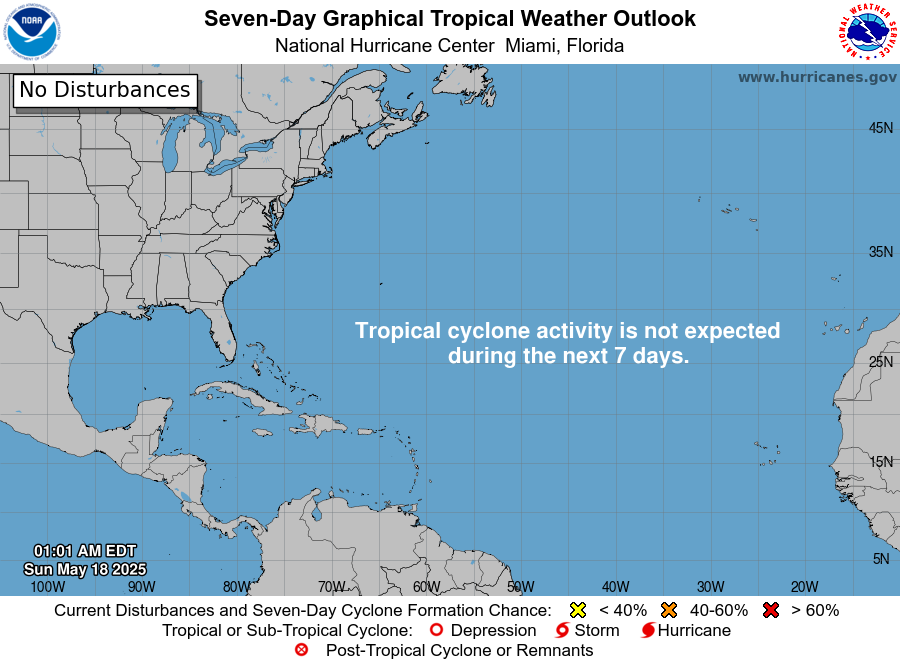
This image loads straight from the National Hurricane Center, so it shows their latest Atlantic outlook. For watches, warnings and storm cones, go to nhc.noaa.gov.
When is hurricane season in Florida?
The Atlantic season runs from June 1 to November 30. The National Hurricane Center puts the peak on September 10, with most activity from mid-August to mid-October. So the work on your roof and windows belongs in the spring, when roofers have time and the materials are on the shelf.
Watch or warning: what each one means
- Hurricane watch: hurricane conditions are possible. NHC issues it 48 hours before tropical-storm-force winds are expected.
- Hurricane warning: hurricane conditions are expected. NHC issues it 36 hours before tropical-storm-force winds arrive.
- The cone: it shows the probable track of the storm's center, not the size of the storm. NHC says effects can reach hundreds of miles from the center, and winds can extend well outside the cone.
A warning is too late to start roof repairs or order shutters. Use the watch to finish, not to begin.
The house checklist, in order
- Check the roof before June. Loose tiles and lifted flashing are where storm water gets in.
- Protect the windows: permanent shutters, impact glass, or cut plywood ready to go.
- Plan the generator so it can never poison the house with carbon monoxide.
- Know the claim rules and take photos of the house now, before any damage.
- Know the scams that show up the week after every storm.
Your family plan and kit
The Florida Division of Emergency Management says to build a supply kit that lasts at least 7 days. Ready.gov says to store one gallon of water per person per day. Look up your evacuation zone on the state's Know Your Zone page. The zones are based on flooding, not wind.
Before you rely on this
This guide is general information, not legal, insurance or engineering advice. In a storm, follow your county emergency managers and the National Hurricane Center. If you are told to evacuate, go.
Common questions
Hurricane season questions
When does Florida hurricane season start and end?
June 1 to November 30, per the National Hurricane Center. The peak is around September 10.
How far ahead is a hurricane warning issued?
36 hours before tropical-storm-force winds are expected. A hurricane watch comes 48 hours ahead.
Does homeowners insurance cover flood?
Most homeowners and renters policies do not, per FloodSmart (FEMA). Flood cover through the NFIP starts 30 days after you buy it, so buy it long before a storm.
How much water should I store?
Ready.gov says one gallon per person per day. Florida's emergency managers say the kit should last at least 7 days.
Hurricane Prep
The guides
Roof Check
What to look at before June, and the Florida roof-age insurance rule.
Shutters
Accordion, roll-down, panels, impact glass or plywood: how they compare.
Generator
Size it to what you need, and set it up so it can't hurt anyone.
Insurance Claim
Florida claim deadlines, flood claims, and what to do first.
Contractor Scams
The after-storm pitches that are illegal in Florida, and how to check a license.
Sources
- National Hurricane Center: tropical cyclone climatology
- National Hurricane Center: glossary (watch and warning)
- National Hurricane Center: about the cone
- National Hurricane Center: about NHC graphics
- Florida Division of Emergency Management: Plan and Prepare
- Florida Division of Emergency Management: Know Your Zone
- Ready.gov: build a kit
- FloodSmart (FEMA): buy a flood policy
Checked October 6, 2026. Official guidance changes; the linked source always wins over this page.